








Large corporations are fertile ground for weird fiction. With their labyrinthine rules and bureaucracy, grim offices and headquarters, habit of turning the average person into a cog in their machines—not to mention the terror that is institutional air conditioning—they’re already pretty weird places here in the real world. Granted, weird fiction pushes that envelope much further: there are corporations that deal in magical artifacts, companies that serve as doorways to elder gods, and places where they seem to manufacture psychological misery.
But given such fertile ground, we have to ask, which of these are the absolute worst to work at? Here are seven strong contenders, but as the number of weird workplaces is infinite, feel free to nominate other possibilities in the comments…
The Company — Intercepts by T.J. Payne

Introduced through one of its victims crying out the name of the middle manager in charge of the experiments, The Company is a disturbing facility from the jump. Their work involves performing some kind of twisted experiments on human beings, turning them into “antennas” that don’t respond to sensory input. We’re treated to what happens when one of their antennas regains consciousness and tears a nurse apart, but far worse are the things accepted as simply commonplace—The Company puts up weird, outdated propaganda posters everywhere (some designed to remind employees of their own families), monitors its employees’ dating apps, and even taps phones remotely outside of work. It’s the aggressively mundane way The Company turns round-the-clock surveillance, brutal human experiments, the process of cleaning up the aftermath, and whatever psychic waves are picked up in their terrifying subbasements into facets of everyday life that makes The Company a truly awful place to work as well as being simply, straightforwardly evil.
The Organization — The Organization is Here to Support You by Charlene Elsby
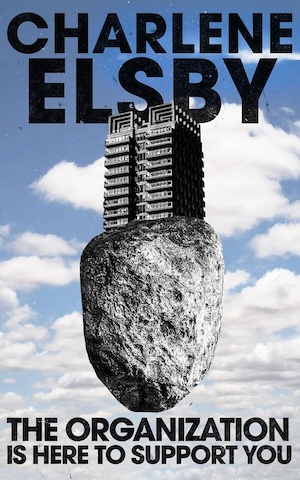
Elsby’s absurdist tale of remote corporate horror centers on “the organization,” a foundation meant to help scientific researchers with funding and resources. That the organization has no policy against researchers sending crude sexual proposals and in fact forces organization employees to treat these like regular requests, or that offices run out of space quickly and devolve into territorial warfare, and that office workers develop divergent evolution from the remote workers are all just natural extensions of their policies. It’s also rife with people using its rigid policies to mess with others, since, curiously, the organization doesn’t see its various employees as human so much as religiously adherent cogs in the machine. The organization may claim they’re helpful, but the results are horrifying.
MicroMeg — Résumé with Monsters by William Browning Spencer
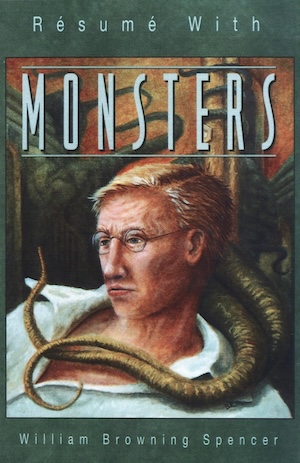
Within its vast, unfathomably cold confines, MicroMeg is every corporate horror story from the 1990s distilled into one single nightmare. Its cafeteria serves gray meatloaf, the employees spout weird-sounding jargon, the executives are all tattooed by the Great Old Ones, bathroom graffiti spells out passages from the Necronomicon, and the mailroom clerk has wired the entire skyscraper to blow. If that weren’t enough, the building is possibly unstuck in time and definitely being used by Lovecraftian beings from beyond the stars as a doorway into our world. The worst part is that MicroMeg is a functioning company in spite of (or perhaps because of) all of this, forcing employees to fill out their timesheets in colored pencil while ignoring the sinister creatures and even more sinister middle management.
Vitessa Cultporation — Zanesville by Kris Saknussemm

Vitessa is perhaps the second-worst company on this list, a globe-spanning organization with their fingers in literally every venture that could feasibly make money that’s also a government and a state-sponsored religion. This insane lack of any consequences has pushed things to the point where now they’re just publicly humiliating the people struggling under their rule, whether that’s turning all of America into a theme park, dispatching a bioengineered barbershop quartet as a kill squad, or merely forcing every fast-food restaurant in the country to serve only haggis. The worst part is, there’s no one else to work for—you’re stuck in Vitessa’s pocket no matter the job.
Zephyr Holdings, Inc. — Company by Max Barry
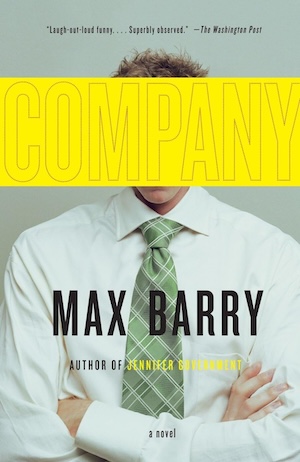
Zephyr is an odd company that insulates itself from any kind of reality through corporate buzzwords and labyrinthine policies, and when those don’t work, messing with the heads of their employees. It’s not merely that they’re sinister, but the fact that they’re openly hostile and weird to the people who work for them, as well as using that open hostility and weirdness to manipulate the outside world through their corporate policies, make them an absolute nightmare to work for. Worse still, unlike the other companies on this list, Zephyr’s sole function seems to be to simply exist as kind of an absurd existential nightmare, toying with everyone who works there, whereas most other sinister corporations at least have a veneer of productivity.
J.W. Wells and Co. — The Portable Door by Tom Holt
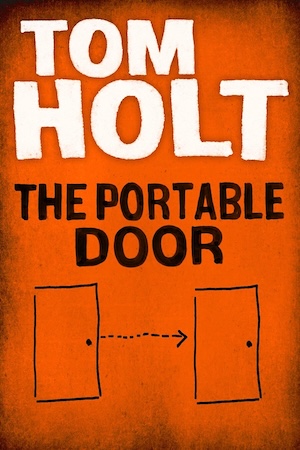
Arguably the most benign corporation on this list, J.W. Wells and Co is more dangerous for what they deal in, and who they deal with, than anything else. As the leading manufacturer of love potions and other magical artifacts (clearly there are all sorts of issues with that already), their work with a variety of magical creatures and substances means they have people cleaning their bank vaults of dragons and circling random patches on aerial photos, their interview process involves asking you to choose which family member you would kill, and there’s a hazard of getting turned into office supplies. While J.W. Wells and Co doesn’t seem particularly evil (apart from the “forcing people to fall in love” thing and the usual ruthlessness inherent to late-stage capitalism), Holt’s universe of corporate magic and boardroom sorcery seems dangerous to even the average employee, let alone one who turns out to be a cosmic pawn in a deeply weird chess game.
Time Warner Time — How to Live Safely in a Science Fictional Universe by Charles Yu

Another corporation that sounds more or less like a regular capitalist organization, Time Warner Time is a company that, as their name suggests, manufactures and maintains time machines. The problems set in when the company also seems to have control over reality and the relative perception of time their employees have, and possibly the entire multiverse, both fictional and nonfictional. They also appoint managers unaware of their status as artificial intelligence, because of course a company like this would force AI into their workflow. By the time you get to the company-mandated policy that you have to shoot your future self if they come back to visit you, it almost seems like just a regular day at work.

I think honourable mention should go to the titular Laundry from Charlie Stross’s Laundry Files, particularly in the earlier books.